
Why Gulf Coast Beaches Have White Sand That Did Not Actually Come From Here
If you have ever walked along parts of the Gulf Coast, especially in places like Orange Beach or the Florida Panhandle, you have probably noticed something:
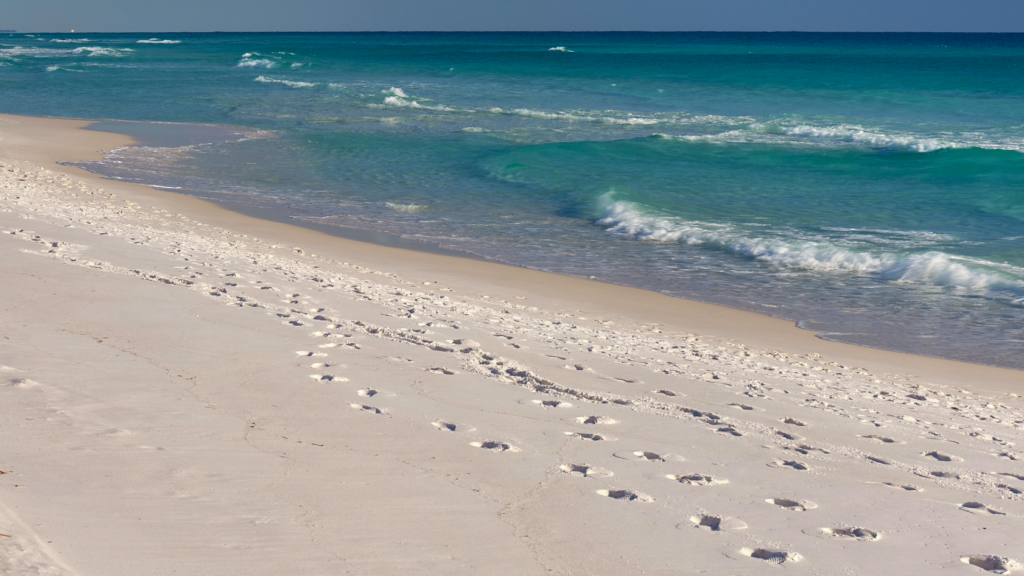
The sand looks unusually white.
Almost bright white.
And unlike many beaches in other parts of the country, it feels soft, cool, and almost powdery under your feet.
Most people assume that sand simply came from the Gulf Coast itself.
But the strange truth is:
Much of the white sand along the Gulf Coast did not actually start here at all.
In fact, some of it began its journey hundreds of millions of years ago in mountains located hundreds of miles away.
Yes, really.
The Sand Came From Mountains
Believe it or not, Gulf Coast beach sand largely traces back to the Appalachian Mountains.
That may sound impossible at first.
How does mountain rock somehow become beach sand on the Gulf Coast?
The answer comes down to time.
A lot of time.
Over millions of years, rain, erosion, rivers, and gravity slowly broke down quartz rock found in the Appalachian Mountains.
Tiny quartz particles gradually washed into rivers and streams, eventually making their way south.
One of the biggest contributors?
The Apalachicola River system, which carried sediment toward the Gulf over an incredibly long period of time.
Little by little, wave action and currents sorted those materials, leaving behind the bright quartz sand people know today.
Why the Sand Is So White
The reason Gulf Coast sand looks so different from many beaches around the country comes down to what it is made of.
Quartz.
Quartz is naturally light colored, reflective, and extremely durable.
Unlike darker minerals that break down more quickly, quartz survives the journey.
That means over time, much of the heavier and darker material disappeared, while the bright quartz remained.
The result?
That famous sugar white sand people travel hundreds or even thousands of miles to see.
It is also why the sand often feels cooler than darker beaches, even during hot summer weather.
Lighter colors reflect heat better than darker materials.
So yes, the beach may literally feel cooler beneath your feet.
Why Some Gulf Coast Beaches Look Different Than Others
Not every Gulf Coast beach looks the same.
If you have visited Mississippi, Louisiana, Alabama, and Florida beaches, you may have noticed dramatic differences.
Some water looks clearer.
Some sand looks whiter.
Some beaches appear darker or flatter.
That is because geography, rivers, barrier islands, sediment, currents, and offshore conditions all affect what reaches the shoreline.
For example, parts of Florida and Alabama are famous for exceptionally bright quartz sand, while Mississippi beaches can sometimes appear darker due to sediment patterns and protected waters created by barrier islands offshore.
It is one of those things people notice but rarely understand.
The Sand Is Older Than Almost Anything Around You
Here is the part that really surprises people:
Some of the quartz that makes up Gulf Coast beaches is believed to be hundreds of millions of years old.
That means the grains beneath your feet may have existed long before:
- dinosaurs
- the Gulf Coast itself
- modern rivers
- human history
The beach you are walking on today is basically the final stop of a geological journey that took longer than most people can even imagine.
One of the Gulf Coast’s Weirdest Hidden Stories
For something so beautiful and recognizable, very few people realize the story behind it.
That soft white sand did not simply appear.
It traveled.
Slowly.
Over unimaginable stretches of time.
And somehow, after a journey that started in ancient mountains, it ended up beneath flip flops and beach chairs on the Gulf Coast.
Once you know the story, it is hard to look at the sand the same way again.
👉 Browse More Gulf Coast Stories
Looking for more Gulf Coast stories, entertainment, and local discoveries? Explore what is happening across Mississippi, Louisiana, Alabama, and beyond.
FAQ
Why is Gulf Coast sand so white?
Many Gulf Coast beaches contain high amounts of quartz, which reflects light and gives the sand its bright white appearance.
Did Gulf Coast sand really come from mountains?
Yes. Much of the quartz sand is believed to have originated from erosion in the Appalachian Mountains before being carried south by rivers over millions of years.
Why does Gulf Coast sand feel soft?
Quartz grains are naturally smooth and fine, giving many Gulf Coast beaches their soft, powdery feel.
Why do some Gulf Coast beaches look different from others?
Water clarity, sediment, rivers, barrier islands, and currents all affect the color and appearance of Gulf Coast beaches.